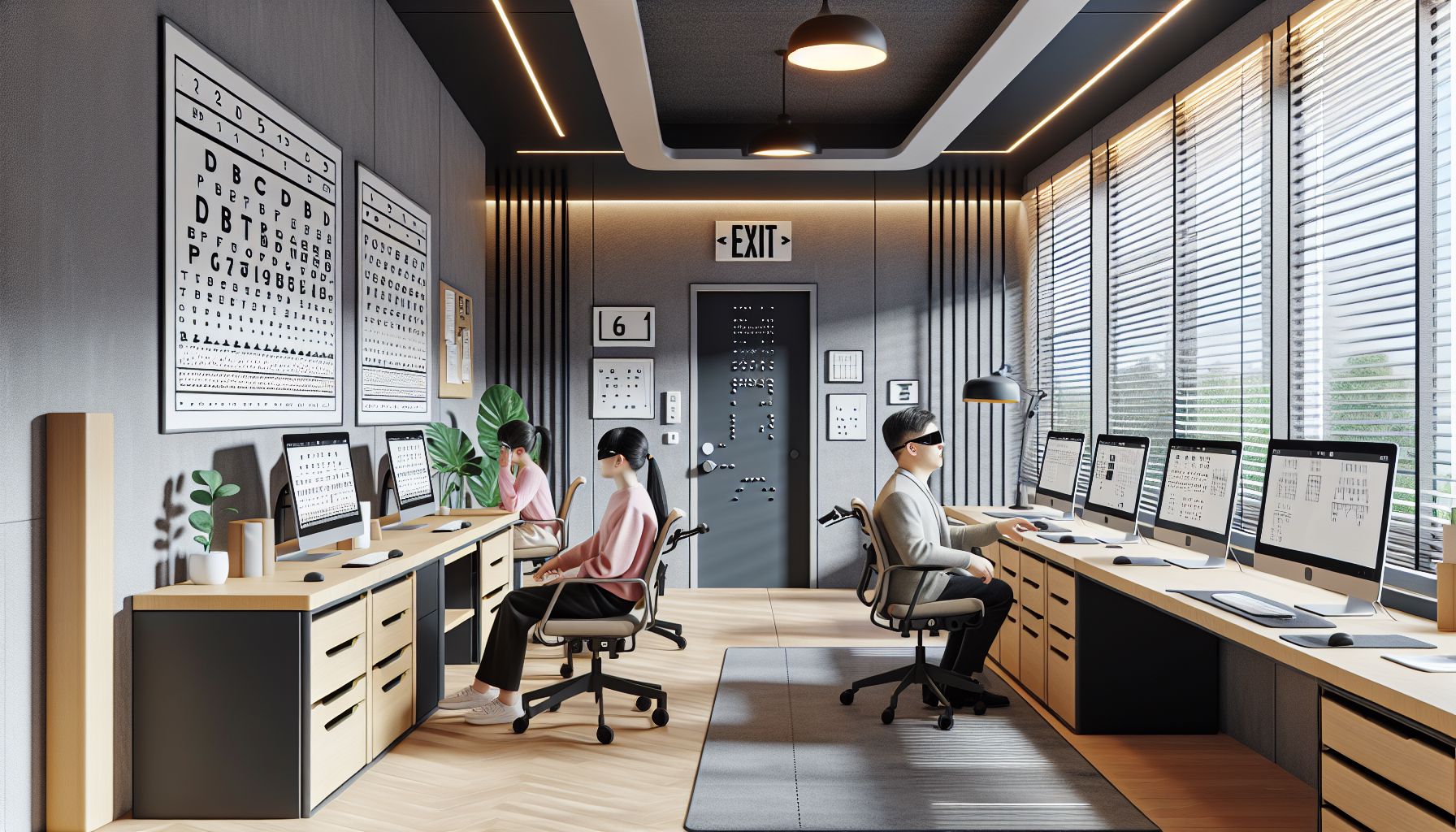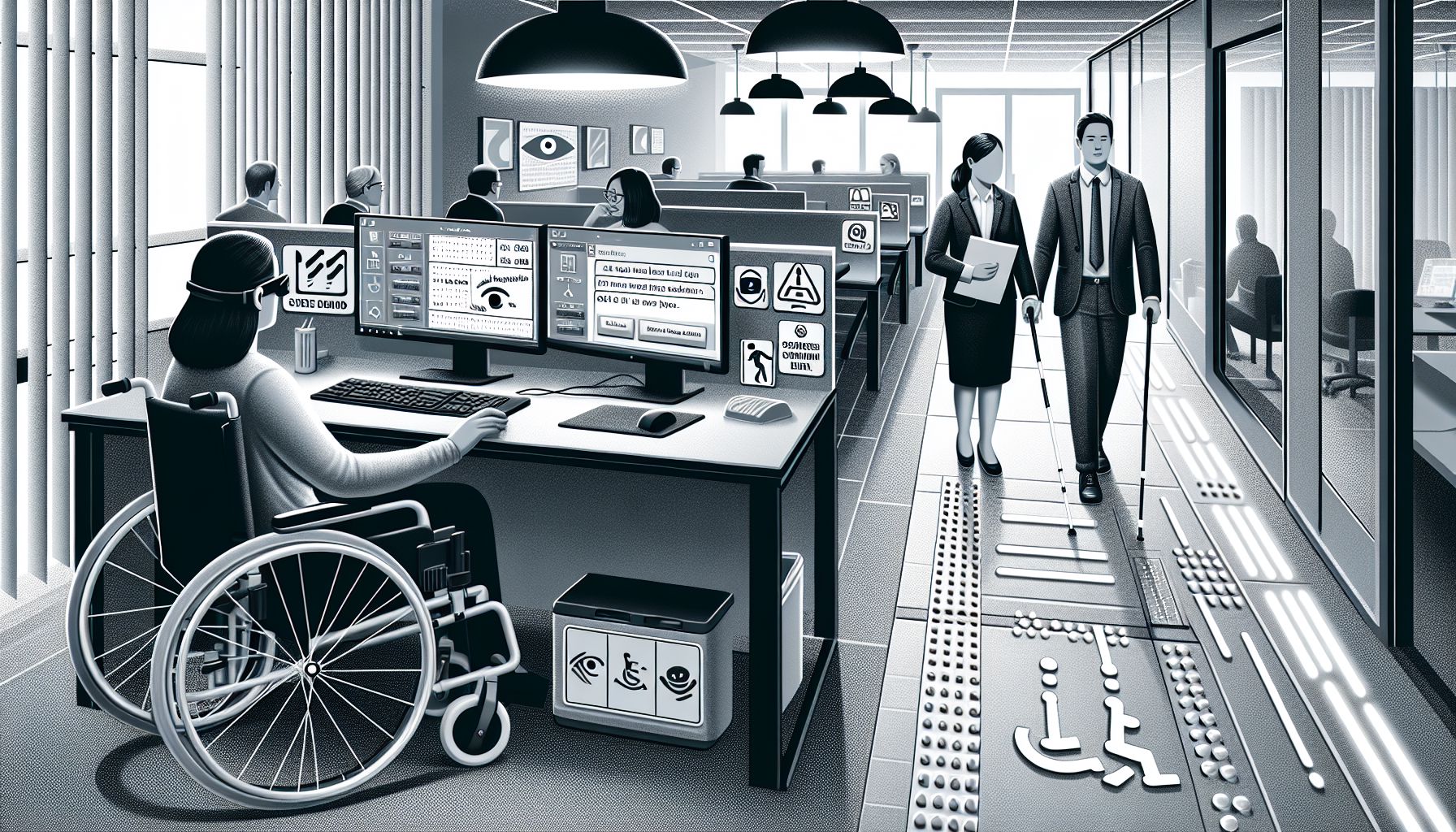
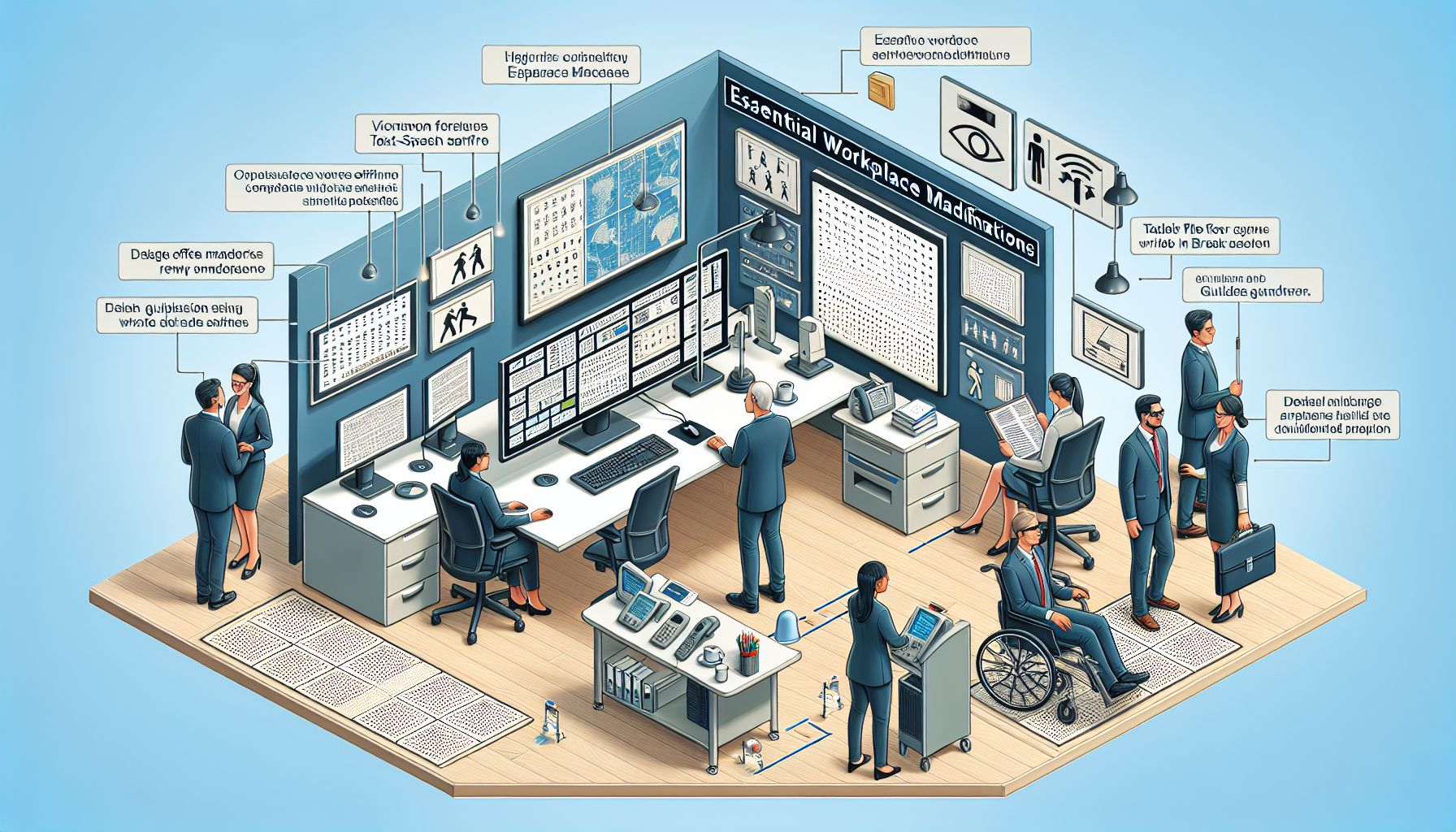
Visual impairments affect many individuals in the workplace. Employers can implement various accommodations to support these employees. This article discusses essential accommodations for workers with visual impairments.
Understanding Visual Impairments
Visual impairments range from complete blindness to partial sight. Each person experiences their vision differently. Understanding these differences helps employers create suitable accommodations. It is important to listen to employees’ specific needs and preferences.
Importance of Workplace Accommodations
Accommodations enhance productivity and comfort for employees with visual impairments. A supportive environment fosters inclusion. It also boosts morale and teamwork. Employees who feel valued are more likely to perform well.
Common Visual Impairments
- Blindness: The complete inability to see.
- Low Vision: Severe visual impairment that cannot be corrected with standard glasses.
- Color Blindness: Difficulty distinguishing specific colors.
- Sensitivity: Increased sensitivity to light.
Understanding these conditions allows employers to make informed decisions about required accommodations.
Essential Accommodations
Employers can implement various solutions to support employees with visual impairments.
1. Orientation and Mobility Training
Providing orientation and mobility training helps employees learn how to navigate the workplace safely. Training can include route planning, location awareness, and the use of mobility aids. This training enhances confidence and independence.
2. Assistive Technology
Investing in assistive technology can make a significant difference. Options include:
- Screen Readers: Software that reads digital text aloud. This technology integrates well with most computers.
- Magnification Software: Programs that enlarge text and images on a screen.
- Braille Displays: Devices that convert digital text into Braille.
- Voice Recognition Software: Tools that allow users to control computers with voice commands.
These tools help employees access information and perform tasks efficiently.
3. Physical Workspace Adjustments
Adjusting the physical workspace can greatly benefit employees with visual impairments. Employers can consider the following:
- Optimal Lighting: Adjust lighting levels to reduce glare and create a comfortable environment.
- Clear Pathways: Maintain clear paths free of clutter to enable safe movement.
- Contrasting Colors: Use contrasting colors on walls, furniture, and floors to help individuals with low vision navigate better.
- Tactile Indicators: Install tactile surfaces or indicators in high-traffic areas to aid navigation.
These changes can enhance safety and promote independence.
4. Flexible Scheduling
Offering flexible work hours may help employees manage their visual impairments better. Some employees may need time for medical appointments or therapy. Flexible schedules can reduce stress and improve work-life balance.
5. Training and Support for Staff
All employees should receive training on diversity and inclusion. Proper training creates awareness and compassion. Supervisors should understand how to support colleagues with visual impairments. Training can include:
- Understanding specific needs of visually impaired colleagues
- Learning how to communicate effectively
- Knowing how to provide assistance without being intrusive
This training fosters a supportive workplace culture.
6. Accessible Documents and Communication
Employers should provide materials in accessible formats. Options include:
- Large Print: Provide materials in larger text for employees with low vision.
- Braille: Offer essential documents in Braille for blind employees.
- Audio Formats: Convert written materials into audio formats for easier consumption.
Pushing for these options simplifies information access for all employees.
7. Open Communication Channels
Encouraging open communication between employers and employees is crucial. Employees should feel comfortable discussing their needs without fear of stigma. Regular check-ins can help identify any new challenges. This approach builds trust.
Benefits of Workplace Accommodations
Accommodations provide several advantages for both employees and employers:
- Increased Productivity: Employees can perform tasks more effectively with proper accommodations.
- Higher Job Satisfaction: Workers feel more content in an inclusive atmosphere.
- Reduced Turnover: Satisfied employees are less likely to leave their positions.
- Positive Company Image: Employers show commitment to diversity and inclusion, improving their reputation.
Challenges in Implementing Accommodations
While it is beneficial to provide accommodations, challenges may arise:
- Cost: Some accommodations can be expensive. However, many options are low-cost or even free.
- Awareness: Employers may not understand the available options or their importance.
- Resistance: Some coworkers may resist changes or question the need for accommodations.
To overcome these challenges, employers should focus on awareness and training.
Conclusion
Accommodations for visual impairments enhance workplace inclusivity and productivity. By focusing on training, technology, and open communication, employers can create accessible workplaces for everyone.
For more information on creating accessible workplaces, visit creating accessible workplaces.
For additional resources, check out American Foundation for the Blind and National Federation of the Blind.