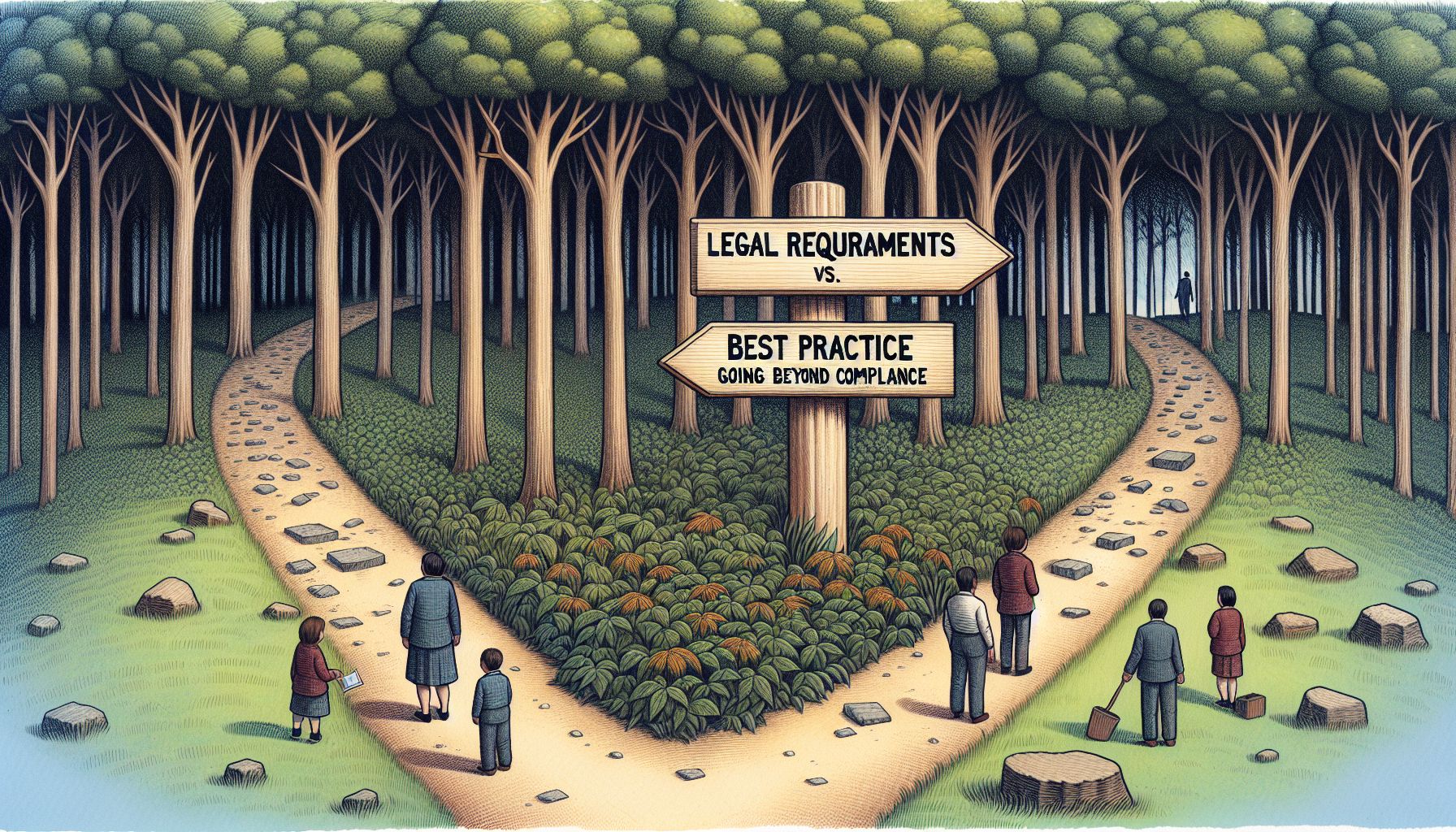

In business, understanding legal requirements is crucial. However, focusing solely on compliance can limit an organization’s potential. This article will explore the differences between legal obligations and best practices. It will also highlight the benefits of going beyond compliance.
What Are Legal Requirements?
Legal requirements are rules established by law. Organizations must follow these rules to operate legally. Regulatory bodies create these laws to protect consumers, employees, and the environment. Examples include labor laws, health and safety regulations, and data protection laws.
For instance, the General Data Protection Regulation (GDPR) sets strict rules for data handling in Europe. Companies that fail to comply can face hefty fines. Thus, knowing and adhering to such regulations is essential for legal operation.
What Are Best Practices?
Best practices are methods or techniques that yield the best results. Unlike legal requirements, best practices are not enforced by law. They are based on industry standards and expert recommendations. They aim to improve processes, enhance efficiency, and promote a positive workplace culture.
For example, while a company may legally manage employee records, adopting best practices could mean ensuring privacy and respect for employees. Best practices draw from collective experiences and research, aiming for continuous improvement.
The Gap Between Compliance and Best Practices
Organizations often meet legal requirements and consider the job done. However, this mindset can lead to a narrow approach. Focusing only on compliance can result in missed opportunities. It can stifle innovation and limit employee engagement.
For instance, a factory might meet safety requirements but could still have a high accident rate. This scenario suggests that merely following the law is not enough. Implementing best practices in safety training can significantly reduce workplace accidents.
Benefits of Going Beyond Compliance
1. Enhanced Reputation
Organizations that adopt best practices often enjoy a better reputation. Employees, customers, and stakeholders appreciate companies that commit to high standards. A strong reputation can lead to more customers and better employee retention.
2. Increased Employee Morale
Employees feel valued in cultures that prioritize best practices. They appreciate working for organizations that care about their welfare. This appreciation can lead to increased productivity and lower turnover rates.
3. Reduced Risk
Best practices can help minimize risks. For example, a company that goes beyond basic data protection laws will safeguard sensitive information more effectively. This proactive approach can protect against data breaches and the legal fallout that follows.
4. Better Financial Performance
Studies show that organizations embracing best practices often perform better financially. Improving processes and efficiency can lead to cost savings. These financial benefits often outweigh the initial investment in implementing best practices.
Challenges in Implementing Best Practices
While the benefits are clear, implementing best practices is not without challenges.
1. Resistance to Change
Employees may resist changes to established processes. Some may feel comfortable with the status quo. Effective communication about the benefits of best practices is essential to overcoming this resistance.
2. Resource Allocation
Implementing best practices requires time and resources. Companies need to be willing to invest in training and development. This might mean allocating budgets in areas that are not immediately visible on the balance sheet.
3. Measuring Effectiveness
Evaluating the impact of best practices can be challenging. Companies need to establish clear metrics. By tracking progress, organizations can adjust their strategies to ensure continued improvement.
Examples of Best Practices
Many organizations have set examples in their fields by going beyond compliance.
1. Employee Wellness Programs
Companies that implement wellness programs improve employee health and productivity. These programs often include fitness classes, mental health support, and healthy living workshops. Doing so shows a commitment to employee well-being that goes beyond simple health and safety regulations.
2. Sustainability Initiatives
Organizations adopting sustainability as a core strategy often see reputational and financial benefits. For example, reducing waste and energy consumption can save costs and bolster brand loyalty. This goes beyond compliance with environmental regulations by actively pursuing a better future.
3. Diversity and Inclusion
Building diverse teams and fostering an inclusive environment are essential. While there may be legal requirements for diversity in hiring, best practices take it further. Through mentoring programs and employee resource groups, organizations can cultivate a culture of inclusion.
The Role of Leadership
Leadership plays a crucial role in bridging the gap between compliance and best practices. Leaders who model best practices inspire their teams. They set a tone for continuous improvement and accountability. Effective leaders prioritize both legal compliance and the pursuit of excellence.
Setting Clear Goals
Leaders should establish clear objectives. These goals should align with both legal standards and best practices. Having a clear vision helps everyone stay on target. This alignment encourages teamwork and collaboration.
Providing Resources
Leaders must allocate sufficient resources for education and training. Investing in employee development not only meets compliance needs but also promotes best practices. Regular training ensures that employees are aware of the latest standards and innovation.
Open Communication Channels
Encouraging open communication fosters a culture of feedback. Employees should feel comfortable sharing ideas for improving practices. This exchange can lead to innovative solutions and a stronger commitment to excellence.
Conclusion
Navigating the landscape of legal requirements and best practices is crucial for organizations. Meeting legal obligations is only the first step. Companies that embrace best practices position themselves for long-term success. By enhancing their reputation, boosting employee morale, and reducing risk, these organizations can thrive.
Exploring resources regarding European employment policies can offer guidance. Check the EU employment package guidelines for valuable insights on inclusive employment practices.
As the business environment changes, organizations must evolve. They should not settle for compliance, but strive for excellence in all practices. The choice to go beyond legal requirements can define success in today’s competitive market.
For more information on best practices in the workplace, you can visit SHRM and Forbes.